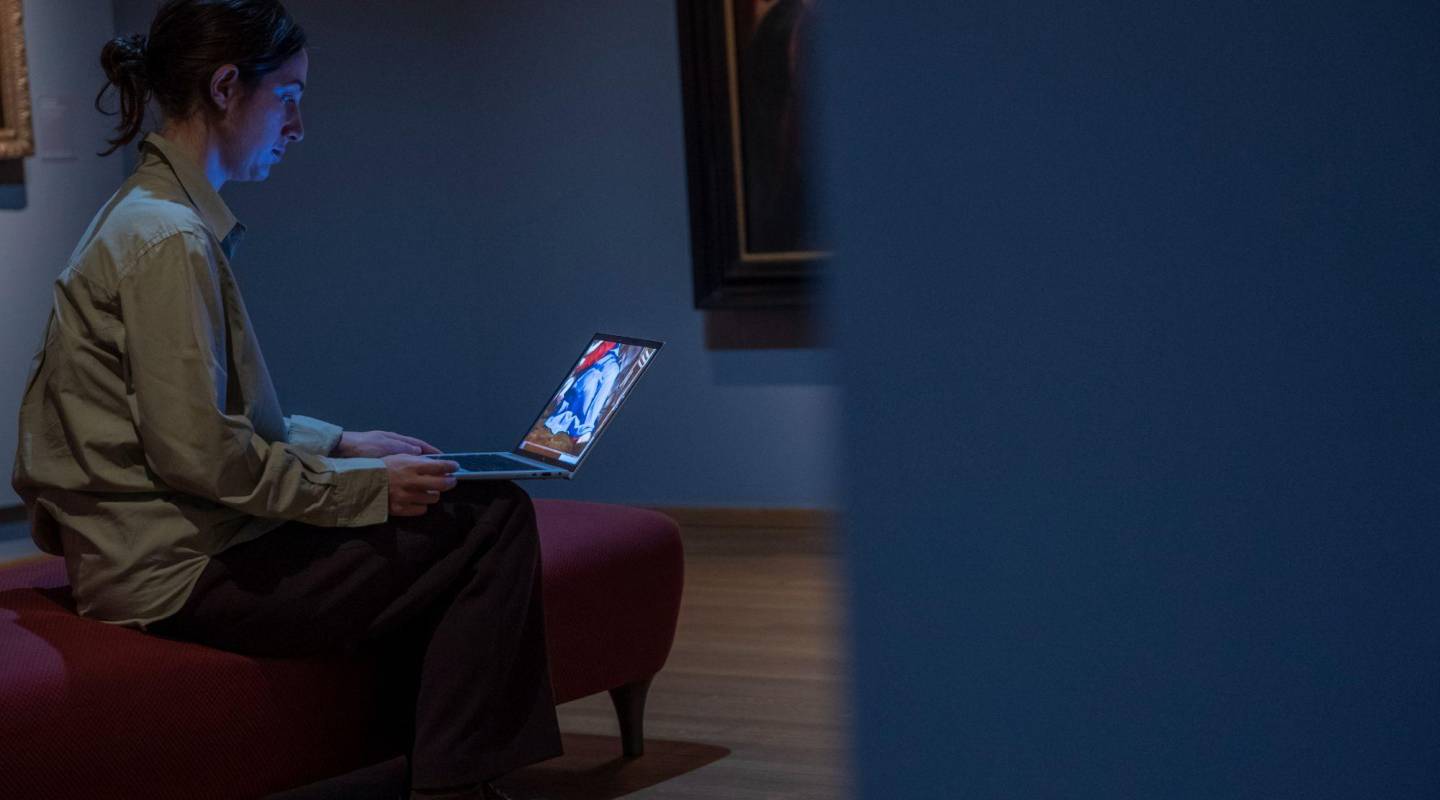
Over time, advances in technology have reached the field of conservation and restoration, offering opportunities to explore the technical aspects of artworks, from the materials used to the methods of creation.
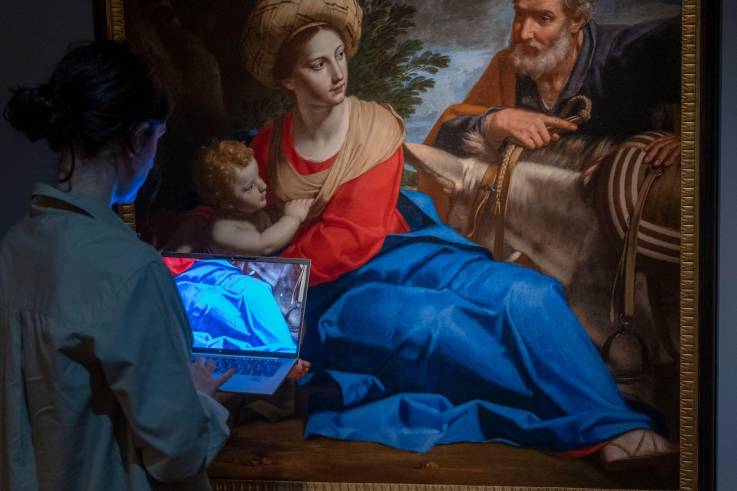
This progress has been driven by a growing interest in understanding the artist’s intentions which helps to inform conservation decisions. As we will see, such studies also shed light on the unique characteristics of individual artists and the historical context in which they worked. This will be illustrated by Rest on the Flight into Egypt, painted around 1640-1642 by the Flemish artist Michele Desubleo (1601-1676). For the analysis, the painting was examined using various imaging techniques – including normal light, ultraviolet, infrared and composite photography – each uncovering details hidden within the different layers of the artwork. The examination begins with the first layer: the surface the artist painted on.
A flexible foundation
Desubleo chose to paint on canvas, a support which gradually replaced the wooden panels that had been favoured previously. The practice of painting in oil on canvas is believed to have originated in 16th-century Venice. As Vasari noted, the flexible and rollable nature of canvas made artworks much easier to transport, which likely contributed to its growing popularity – even in cities where it might initially have seemed less practical, such as Venice itself. From a technical perspective, this shift had a significant impact on artistic composition, as it allowed for much larger formats. The typical dimensions of canvases were often determined by the width of the looms used to produce them, which in Italy tended to range between 106 and 110 cm — roughly corresponding to the width of Rest on the Flight into Egypt. Canvas also altered the texture of the painted surface: unlike panels, it is not perfectly flat or smooth, and this subtle irregularity gave greater vibrancy to the compositions. These advantages explain the gradual adoption of this support in Europe during the 17th century.
A pictorial alphabet
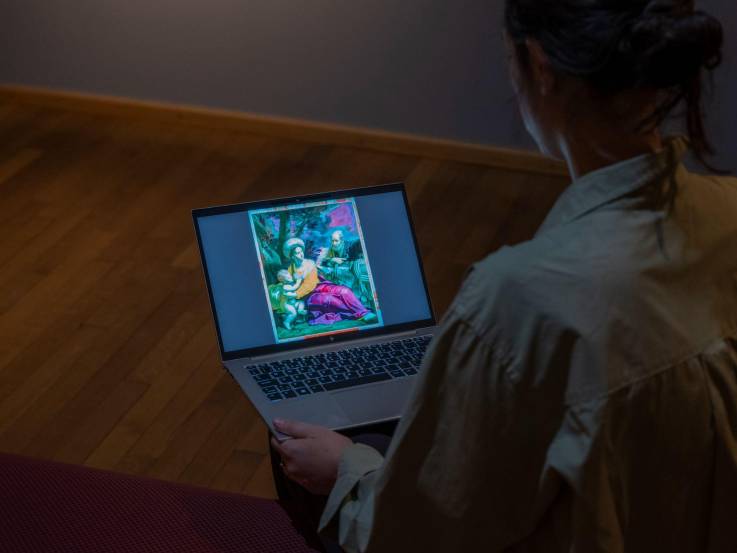
Before painting, artists usually prepared their canvas by applying glue and a layer of primer. This ground layer helped smooth the surface and made sure the paint would adhere properly to the canvas. Colour also played a major role. In Rest on the Flight into Egypt, we can clearly see that Desubleo used a warm brown tone, similar to the one in his self-portrait as Saint Luke (Girometti S., Seccaroni C., 2022). This was a common choice among Italian painters at the time, as noted by contemporary writers from Italy and Spain. It differed from northern European traditions where grey was used more often. Using darker ground layers was a new technique back then, since lighter colours had been more typical. This helped painters achieve visual effects that had rarely been explored prior to the 17th century. Technically speaking, this ground layer is sometimes left visible to serve as a mid-tone, providing a base for constructing shadows and volume through the application of thin dark glazes. In contrast, the luminous flesh tones of Rest on the Flight into Egypt are rendered with thicker brushstrokes and more opaque layers. The result is a measured play of contrasts, defined as a moderate chiaroscuro. This effect also intensifies the light effects – particularly evident in the figures of the Virgin and the Child – contributing to the overall radiance of the composition. It reflects a key feature of the Bolognese classicism that the artist adhered to at the time. Moreover, the use of a darker ground and pronounced contrasts enhances the opacity of pigments, lending greater brightness to the colors. The vivid blues and deep reds – likely influenced by his fellow artist Guido Reni – constitute a restrained yet striking palette, characteristic of the Bolognese school. The artist’s controlled but rich chromatic range is also evident in the use of two distinct blue pigments, clearly visible through composite imaging.
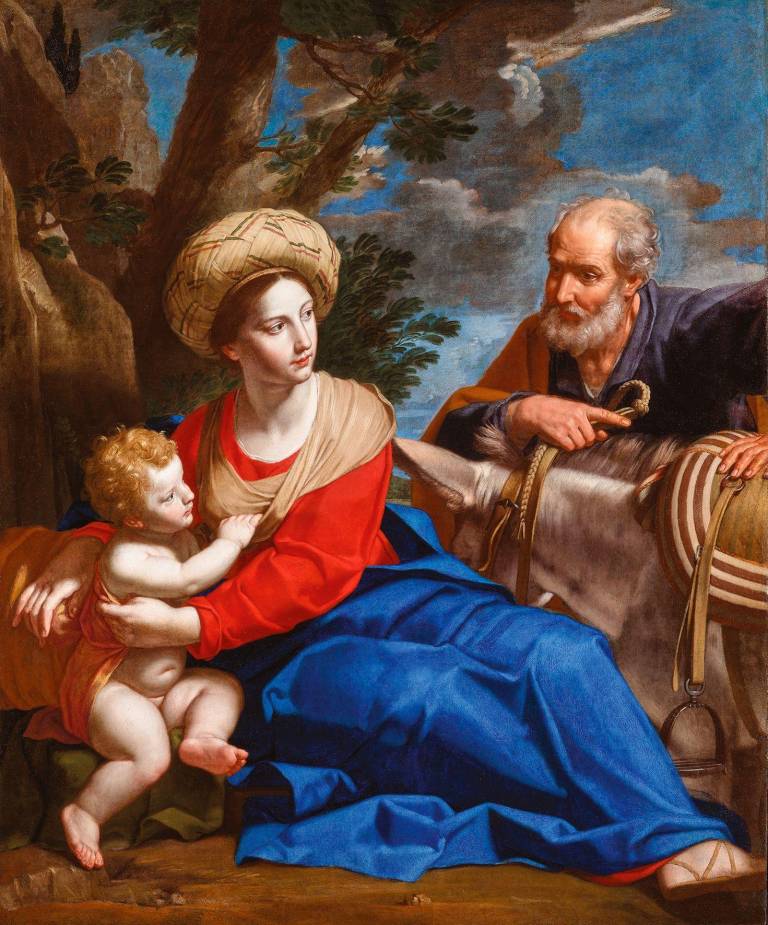
For the analysis, the painting was examined using various imaging techniques – including normal light (upper left), ultraviolet (upper right), infrared (lower left) and composite photography.
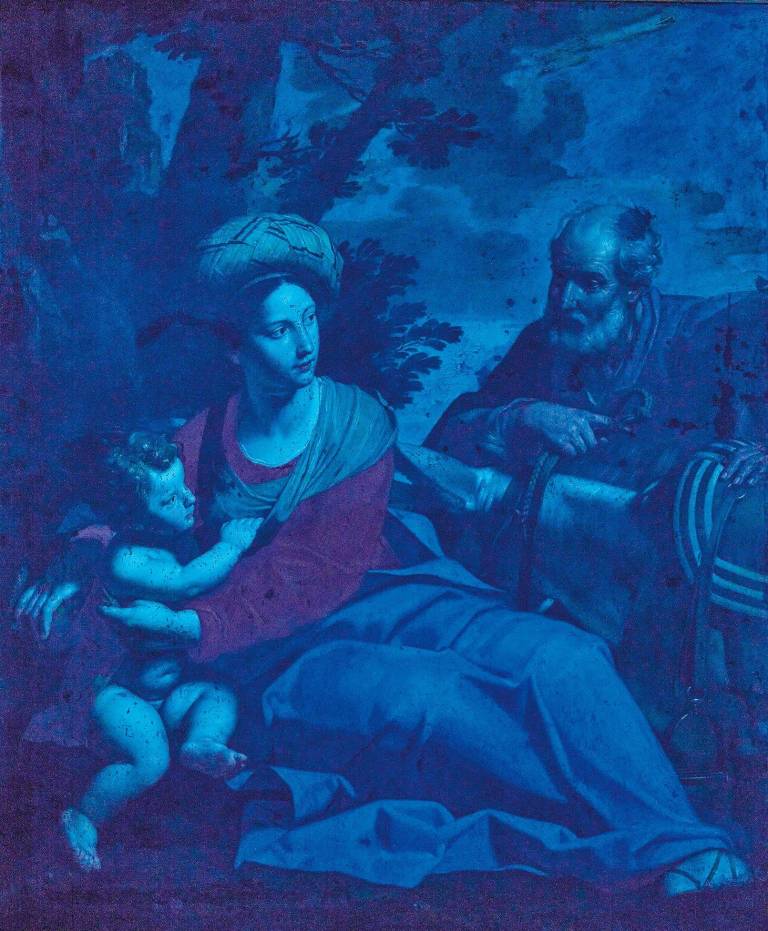
For the analysis, the painting was examined using various imaging techniques – including normal light (upper left), ultraviolet (upper right), infrared (lower left) and composite photography.
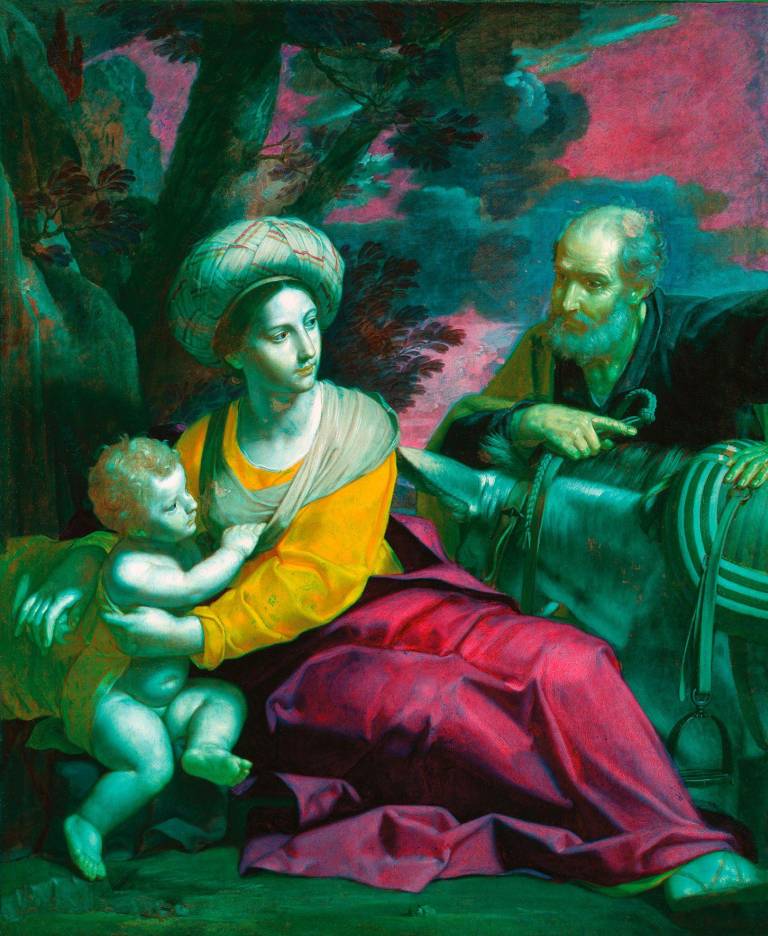
For the analysis, the painting was examined using various imaging techniques – including normal light (upper left), ultraviolet (upper right), infrared (lower left) and composite photography.
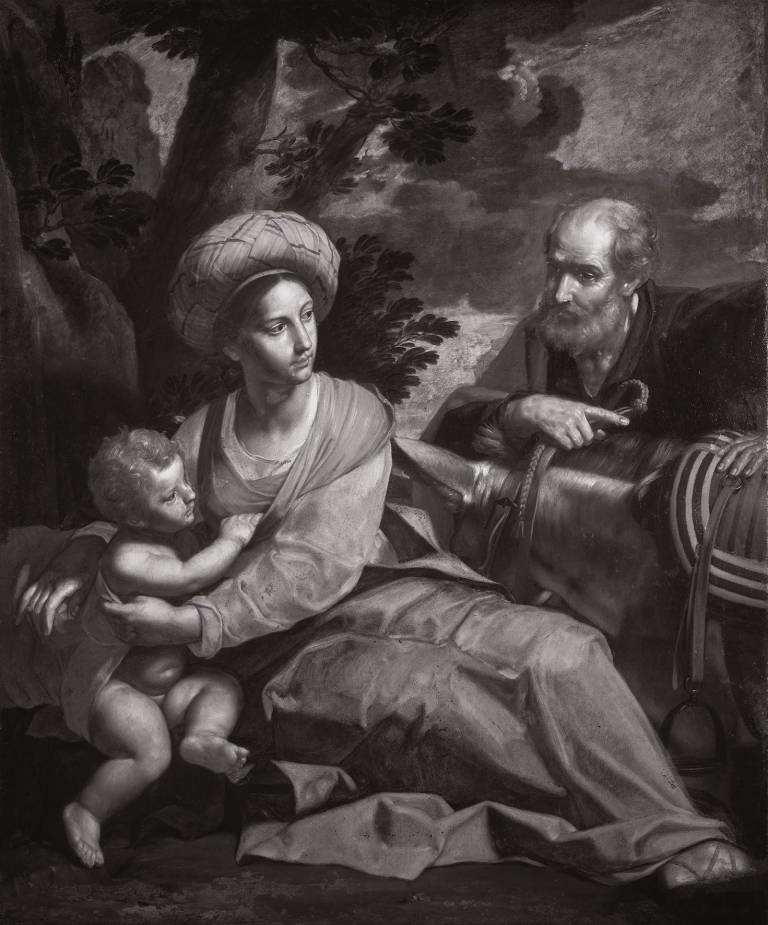
For the analysis, the painting was examined using various imaging techniques – including normal light (upper left), ultraviolet (upper right), infrared (lower left) and composite photography.
The detail that makes the difference
Infrared imaging has revealed a preparatory drawing in black paint beneath the surface of Rest on the Flight into Egypt, showing slight variations from the final composition. Numerous compositional adjustments, or pentimenti, are also visible throughout the painting, indicating that the artist refined his design during the painting process. These changes, made both at the drawing stage and after the first layer of paint, reflect a constant search for balance. Together, they reveal Desubleo’s remarkable precision and the careful planning behind this masterful composition. Desubleo’s Rest on the Flight into Egypt reflects the broader historical transformations of 17th-century painting, particularly the shift in materials and techniques. More specifically, it captures the experience of many itinerant artists who, arriving in Italy with a Northern artistic heritage, embraced local traditions in their work. Moreover, this painting brilliantly demonstrates how technique itself can become a language – one that conveys stylistic influences, such as Bolognese classicism, while also expressing the artist’s own precision and sense of composition.
Text: Laura Guilluy (Restauration, régie, ateliers et dépot) - Photos: Tom Lucas (MNAHA)
Source: MuseoMag N° I - 2026