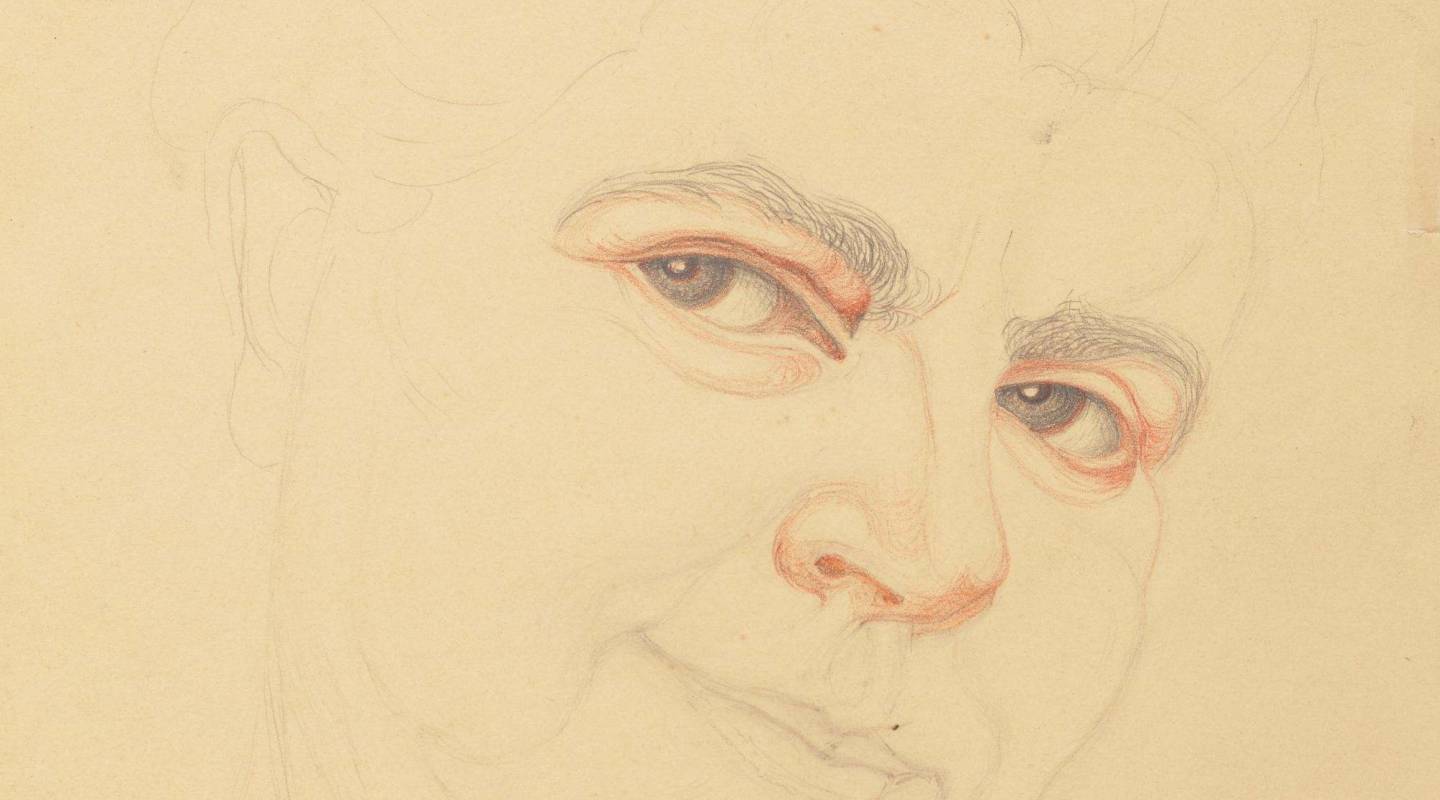
Berthe Brincour is not a name many people would think of, or even recognise, when reflecting on the canon of modern Luxembourgish painters.
I still remember the first time I came across one of her large-scale figurative paintings, a few years ago, shortly after I’d started working at the museum. I was struck by how modern and unlike anything I thought I knew of Luxembourgish art at the turn of the twentieth century it felt. The scale, the way she handled colour, the way she depicted the human body – I kept asking myself: how had I never seen this work before? How had I never even heard her name?
This June, visitors to Nationalmusée um Fëschmaart will hopefully experience a similar moment of discovery when they explore her work in the first major retrospective dedicated to this exceptional, yet long-overlooked, modern artist. Berthe Brincour (1879-1947). Une artiste hors normes et hors temps brings together works from the museum’s own collection, alongside a handful of loans from private collections uncovered through last year’s call for contributions. When she died in 1947, Brincour bequeathed her entire personal collection, including artworks and many personal objects, to the Luxembourg State. Although the then Musées de l’État organised an exhibition that same year to honour the gift, in the decades that followed very little attention was paid to placing her work in a broader national and international art historical context.
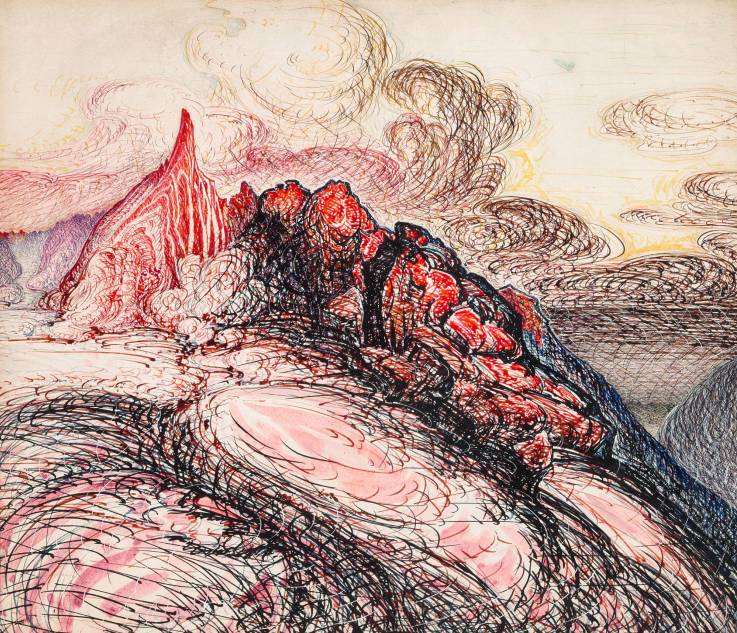
Berthe Brincour (1879-1947), Untitled (Sunrise over the Mountain Tops), c. 1925-1938, watercolour and ink on paper, Collection MNAHA, © Tom Lucas / MNAHA
Who was Berthe Brincour?
Very little is known about her. Archival sources are scarce and until recently almost no research had been undertaken. That said, the work carried out for this exhibition has allowed us to reconstruct significant parts of her life, showing where she lived and worked and revealing the story of a woman at the turn of the twentieth century who led a remarkable transnational life, moving and working abroad for most of her adult years.
Born in 1879 into a wealthy Luxembourgish family, Brincour was the daughter of Marie Huber and Joseph Brincour, a lawyer and member of parliament. She grew up with her two brothers in a very bourgeois milieu in Luxembourg City, where the family lived in a neoclassical villa on Boulevard Royal. Her journey abroad began in 1899, when she moved to Munich to study at the Damen-Akademie, a women’s art academy founded by the Künstlerinnenverein München as a counterpart to the Akademie der Bildenden Künste München, which didn’t admit women until 1920. From around 1903 to 1911, she spent extended, though not uninterrupted, periods in Dachau, then a lively artistic hub connected to the so-called Dachauer Künstlerkolonie. After a few years back in Luxembourg, she relocated around 1919 to Switzerland, living in Geneva and Lausanne, before moving in the 1930s to Paris, already in her fifties. Around 1941, she returned to Luxembourg, where she remained until her death.
Looking at Brincour’s work, you don’t always see these places literally reflected in her subjects. But they’re there in subtler ways, sometimes in shifts of style, other times in hints of the artistic circles she may have encountered. Because most of her works are undated, these geographical anchors are among the few clues we have for situating her pieces in time. Her bequest, the largest collection of material connected to her, also remains a vital resource for understanding her life and art.
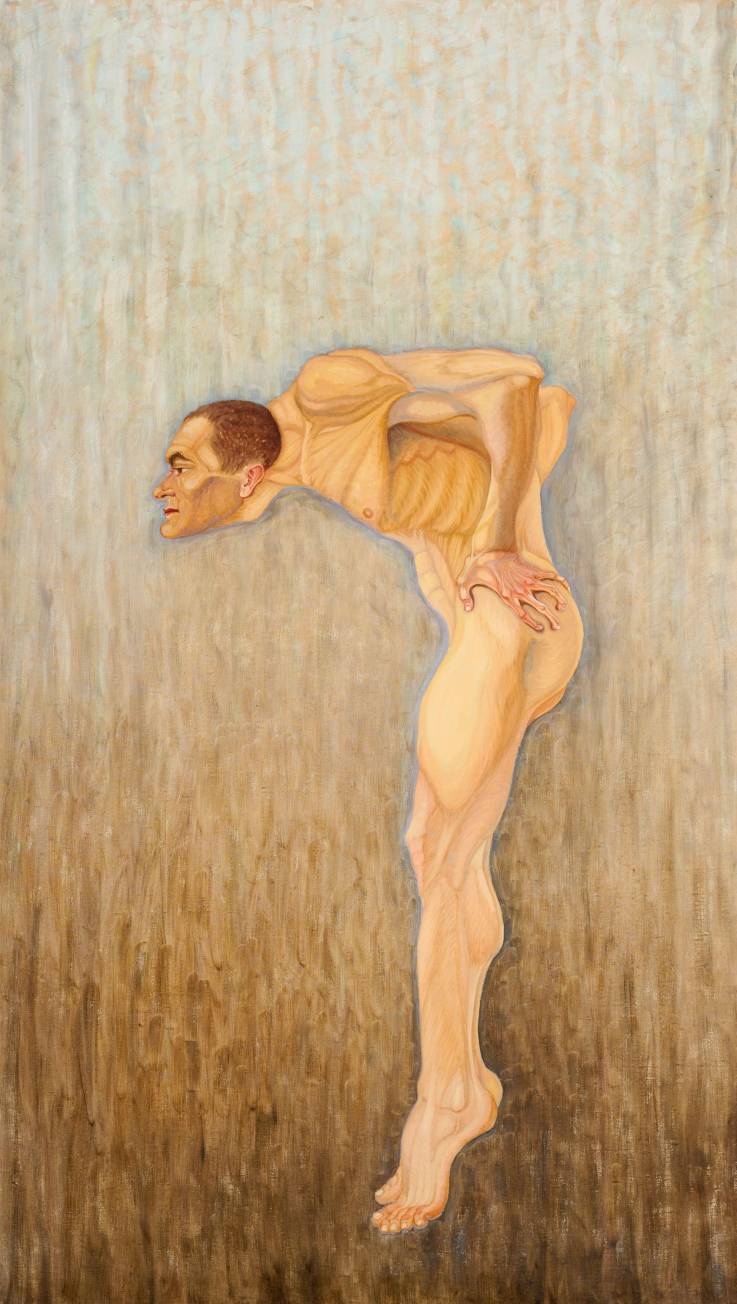
Berthe Brincour (1879-1947), Untitled (Male Nude Moving in Space), c. 1915-1930, oil on canvas, Collection MNAHA, © Tom Lucas / MNAHA
Mapping Brincour’s Work
Since we can’t date most of Brincour’s works with certainty, a chronological exhibition didn’t make sense for this project. Instead, the show takes a thematic approach, grouping works by subject: landscapes and natural scenes, representations of the human figure and a series of ink drawings of Alpine landscapes.
With scenography designed by the Luxembourg-based bureau NJoy, the exhibition gives a sense of the full range of Brincour’s practice. Alongside paintings, there are numerous works on paper, some impressively large. Her language combines swirling, graphic lines with soft, often pastel colours. While you can sometimes detect influences from contemporary movements like Symbolism or Post-Impressionism, her work resists neat categorisation.
The human figure appears frequently, often challenging the beauty standards of her time, sometimes raw, sometimes a little peculiar. Her landscape paintings, likely among her earlier works, created during her years in Bavaria, show strong graphic qualities and feature palettes and brushwork that reappear in her later figurative works. By contrast, her Alpine ink drawings reveal another side of her practice. Probably created in the 1930s, inspired by the Swiss landscapes around Geneva and Lausanne, their bold, gestural lines convey a more introspective mood. Together, these works don’t just document the places where she lived, but they offer rare glimpses into how she saw the world and approached her art, all the more valuable given how little else we know about her life.
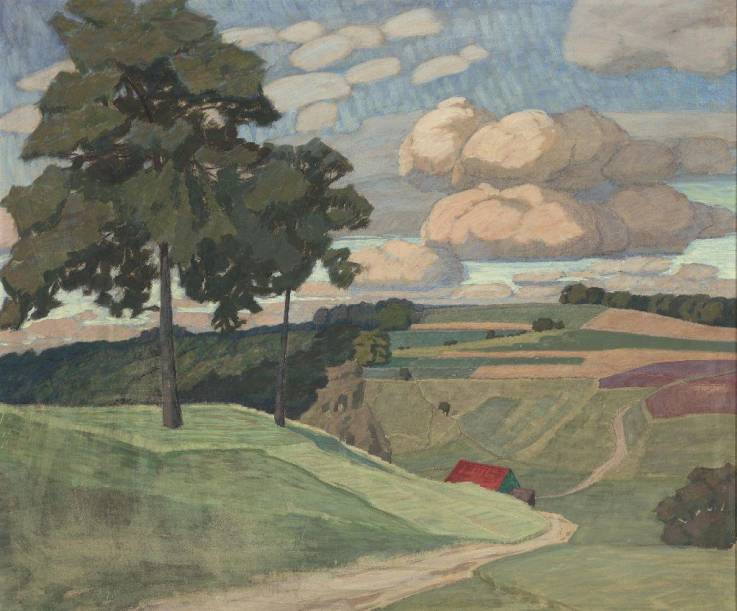
Berthe Brincour (1879-1947), Untitled (Plateau Landscape), gouache on paper, c. 1900-1915, Collection MNAHA, © Tom Lucas / MNAHA
Bringing Expertise Together
This exhibition wouldn’t have been possible without the curiosity and dedication of so many colleagues who, like me, have long been fascinated by Berthe Brincour. It’s been a true team effort, growing over several years through close collaboration with colleagues from conservation and restoration, as well as the Lëtzebuerger Konschtarchiv. Visitors can experience that collaborative spirit firsthand in the exhibition, where we’ll show a short documentary in which some of those involved share their insights. The film, produced by the Belgian company Danse la Pluie, takes viewers behind the scenes of both research and preparation for this project.
In the interviews, you’ll see Brincour’s technique up close, explore her original painter’s box and learn how her works have been cared for and restored. The film also touches on the detective work of piecing together her biography, tracing where she lived and considering which artists might have influenced her. Together, it shows the interdisciplinary approach that underpins the entire exhibition. And it doesn’t stop there: the accompanying catalogue will explore these findings in more detail, offering the first comprehensive publication on Brincour’s life and work.
Text: Lis Hausemer - Photos: Tom Lucas / MNAHA
Source: MuseoMag N° II – 2026
Our exhibition Berthe Brincour (1879-1947). Une artiste hors normes et hors temps is on view from 5 June 2026 to 10 January 2027. The opening is on 4 June 2026 at 6 pm.