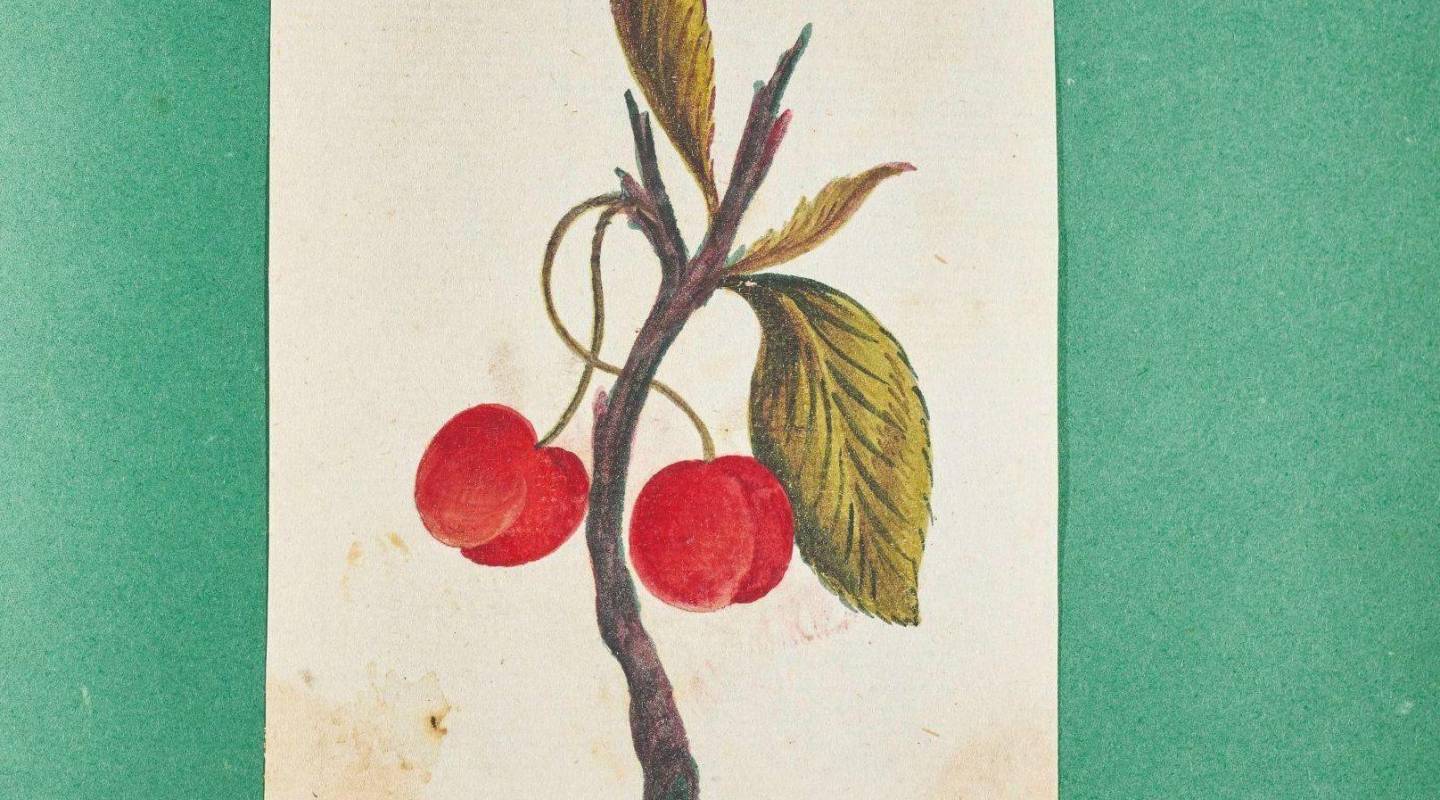
Marie Anne Hencké, Marianne Hencké, Marianne Henké, Maria Anna Henke, Marianne Hencké-Maréchal. One woman — and a trail of names.
At the Lëtzebuerger Konschtarchiv, this is a familiar beginning. When researching women artists from earlier centuries, the first challenge is often not a missing artwork but a missing identity. Women appear under maiden names, married names, their husband’s first and last names, regional spellings, or sometimes not at all. Luxembourg’s historical records add another layer of difficulty: administrative documents were produced in several languages, and names were frequently adapted accordingly. On top of that, many sources are handwritten, which complicates matters further. All these factors can make identifying historical artists – particularly women – challenging. Addressing these gaps in the records of Luxembourg artists is one of the missions of the Konschtarchiv.
It was in this context that our attention returned to Marie Anne Hencké, whose refined flower paintings hold a special place; to the best of current knowledge, they are the earliest works by a female artist from Luxembourg in the collection of the MNAHA. That alone made us want to take a closer look. Who was she? Where did she train? What kind of artistic environment shaped her? As often, the answers were more elusive and richer than expected. Due to the different spellings of the family name across sources, surprising connections within the collection have only been confirmed by recent research.
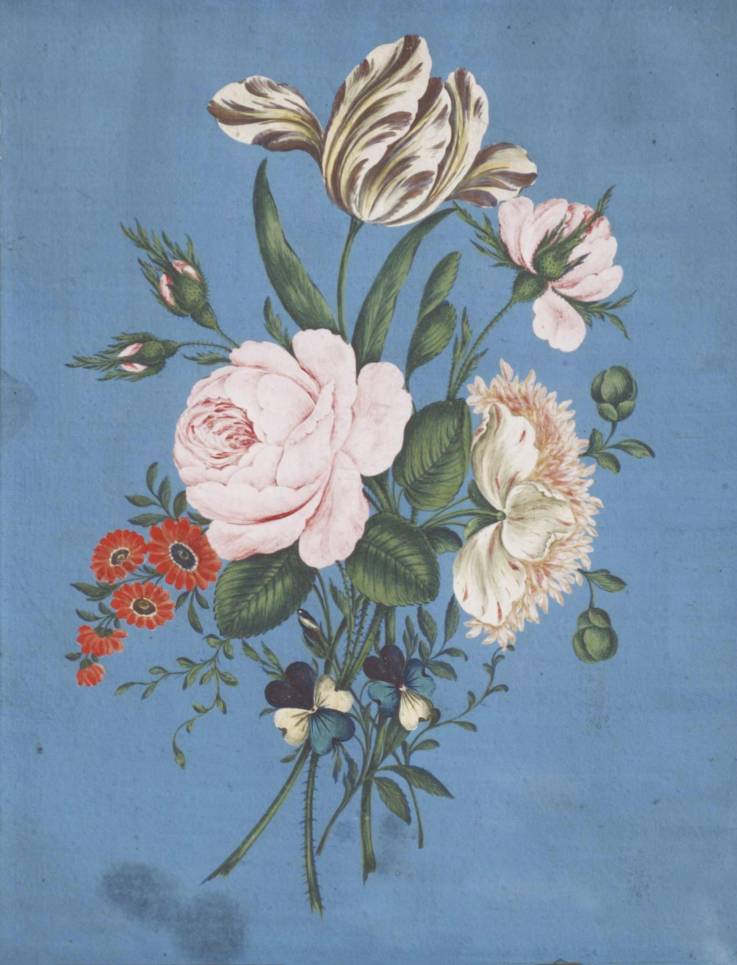
Marie Annne Hencké, Flowers, ca. 1835, gouache on paper,
© Tom Lucas / MNAHA
A Painter in a House Full of Art
Marie Anne Hencké (1771-1840) was born into a wealthy merchant family with six children in Luxembourg. Her father, Henri-Ambroise Hencké, came from Prussia and was the first Protestant to settle officially in the capital of the Catholic Duchy of Luxembourg in the 1760s. His right of residence followed lengthy negotiations at high administrative levels, effectively altering existing religious regulations. His promise to practice his faith privately, his economic importance and his marriage to the Catholic Marie- Catherine Servais, a member of a locally established family, helped secure his position.
H. A. Hencké became one of the richest merchants in the country. In 1795, Revolutionary France annexed Luxembourg and drafted him into its troops. Already firmly established and a widower by that time, he continued to operate within the new French administrative and legal order. Religious tolerance, however, remained complex in practice. At his death in 1804, Hencké was buried at the foot of the enclosure wall of the Catholic cemetery, an area reserved for Protestant burials.
The family lived in the Maison d’Osbourg, a patrician house on the corner of today’s Rue Chimay and Rue Notre-Dame. Constructed for the lay assessor Jean Osbourg in the seventeenth century, the building served several purposes over time; in the 1820s, rented out to the Municipal Administration, later a location of the popular Bavarian brewery Münchner Kindl, its final owner until its demolition in 1963 was Luxembourg’s former Prime Minister Joseph Bech.
When the Hencké family lived there, works of art formed a significant part of the building’s interior and exterior. According to Jules Mersch’s Biographie Nationale (1947-75), Hencké maintained close ties with Orval Abbey, which was destroyed in the French Revolution, possibly to appease Catholic society or as a patron of the arts. Mersch writes that the Hencké household contained works by the painter and monk of Orval Abbey, Jean-Louis Gilson, better known as Frère Abraham (1741-1809), his brother Jean-Henri or Frère Jérôme (1744-1810), and by the travelling Eastern European painter Ignatius Millim (1743-1820) who was very active in the Greater Region in ecclesiastical and private contexts. The presence of such artworks in the Hencké residence points to a milieu in which drawing and painting were valued accomplishments.
In his Anthologie des Arts au Luxembourg (1992), Lambert Herr suggests that Frère Abraham may have given Marie Anne Hencké painting lessons. There is no known documentation to support this and art historian Henri Carême has expressed his doubts about this theory. Nevertheless, it remains plausible that she received artistic instruction appropriate to her social standing. In keeping with expectations for upper-class daughters of her time who were not supposed to have a profession, her education likely included cultivation, drawing, music — and preparation for marriage.
In 1799, she married Jean François Maréchal, a lawyer whose career under successive regimes in Luxembourg – Austrian, French and Dutch – led him through judicial and administrative offices of considerable responsibility. The couple had three children and lived in the capital’s Avenue Monterey.
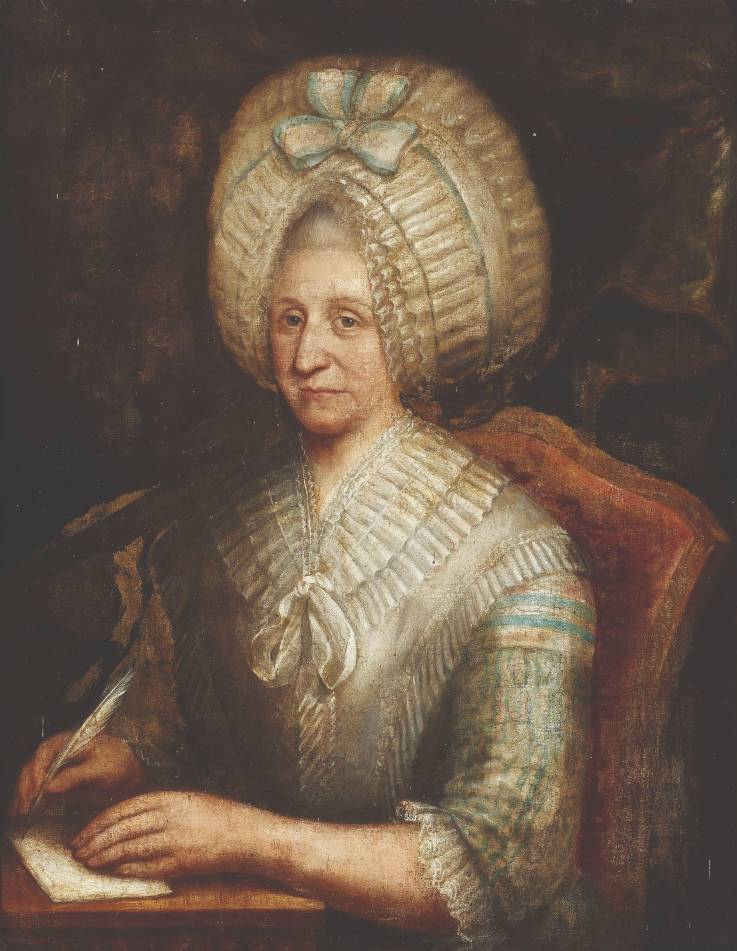
Ignatius Millim, Marie‑Catherine Hencké‑Servais (1738–1792),
ca. 1775–1799, oil on canvas, © Tom Lucas / MNAHA
A Family Network in Times of Transition
While Marie Anne Hencké’s life can be traced through civil records until her death, she does not appear to have been publicly active as an artist during her lifetime which was common for women of this period. Her artistic practice is, therefore, best understood as that of a cultivated amateur. The surviving paintings gain importance as material evidence of this kind of activity.
The broader Hencké family, by contrast, is well documented. The sons served in high ranks of the military and later in commerce. The daughters married into families of comparable or rising standing. Descendants continued to occupy roles in legal and civic institutions, while marriages extended the network further. These roles and alliances placed the family at the intersection of economy, law and political life in the eighteenth and nineteenth century.
Through these trajectories, the Hencké family history reflects broader processes: the impact of the French Revolution, administrative reorganisation and the gradual reshaping of political structures in the region. Following the biography of one painter, thus, opens onto a micro-history of Luxembourg’s passage through geopolitical reconfiguration and constitutional change. Questions of religious tolerance, urban property, artistic production and patronage, civic elites, women’s education and the emergence of modern state structures intersect within the family constellation.
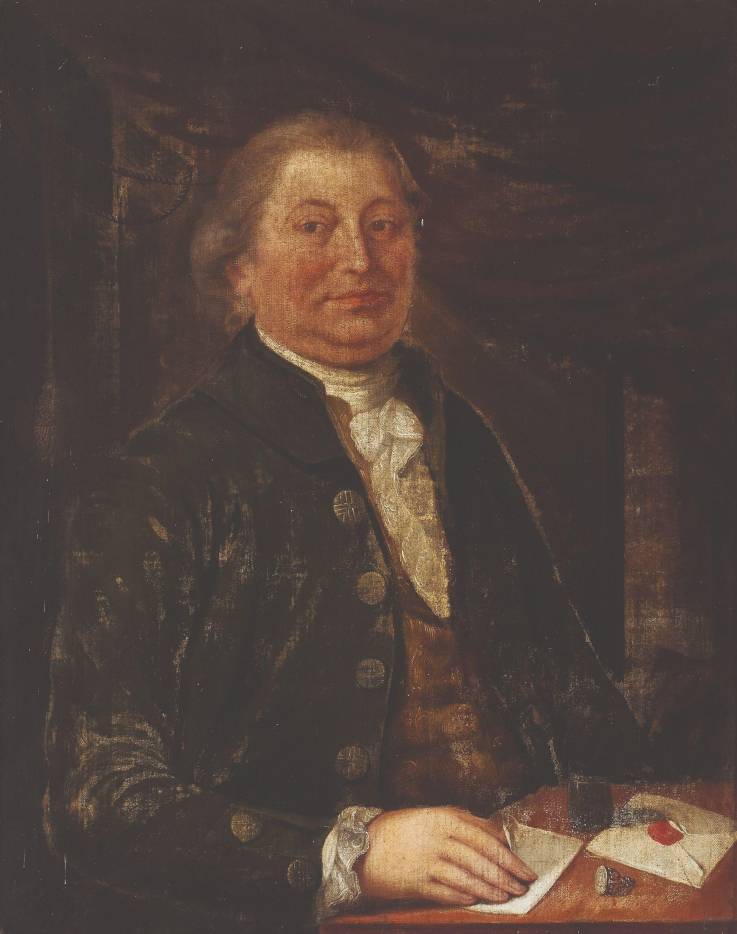
Ignatius Millim, Henri Amboise Hencké (1738–1804),
ca. 1775–1799, oil on canvas, © Tom Lucas / MNAHA
The MNAHA Collection as a Point of Convergence
The collection features two complementary chapters linked to this history: Marie Anne Hencké’s flower paintings entered the national collection in 1940–41, acquired from her great-granddaughter Louise Maréchal.
A second chapter was added in 2017, when the Musée Dräi Eechelen acquired several eighteenth and nineteenth-century portraits attributed to Ignatius Millim from descendants of Joseph Bech. These paintings come from the historic building formerly inhabited by the Hencké and Bech families. They depict the merchant couple Hencké-Servais – these portraits are currently on display at the Musée Dräi Eechelen – their daughter Marie Catherine Hencké Landmann – Marie Anne Hencké’s sister – and members of Hencké-Landmann’s family.
Within the museum, these works now reunite the family in an unusual way: Ignatius Millim’s portraits, acquired from the Bech family, show several generations of the influential merchant family Hencké, while their daughter Marie Anne is not among them. Her flower paintings were acquired much earlier, during the Second World War, from Hencké’s direct descendants. Only now, their significance as the earliest works by a female Luxembourgish artist in the museum has fully come into focus. The collection, thus, forms a visual point of convergence for the family history, otherwise dispersed across archival sources.
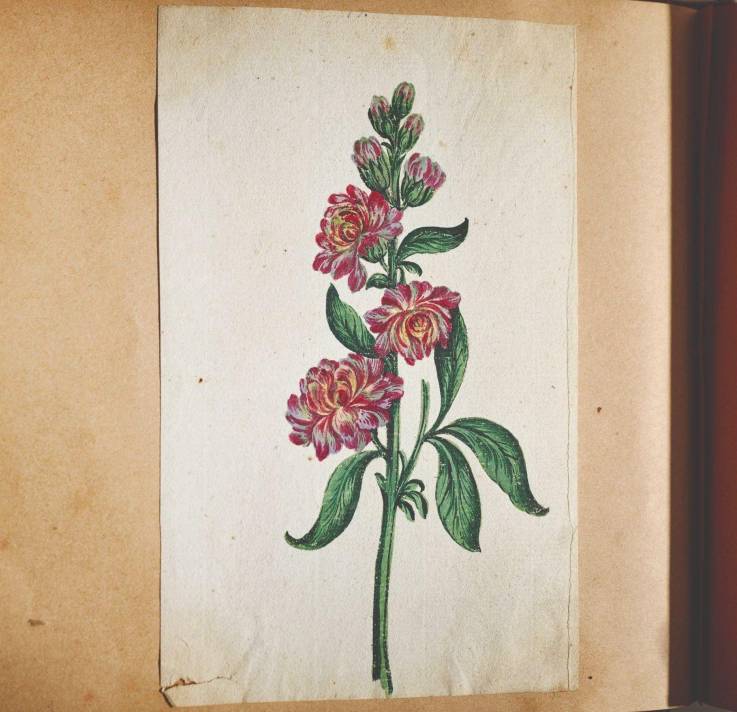
Marie Anne Hencké, Album de dessins, ca. 1780–1850,
watercolour and pencil on paper, © Tom Lucas / MNAHA
Research in Progress
Marie Anne Hencké Maréchal’s biography illustrates both the possibilities and the limits of current research. Her life as a member of a prominent family can be reconstructed through civil and notarial records, yet her artistic activity is documented primarily through the few works preserved in our collection. This situation is typical for many women who practised art in domestic or semi-private contexts during her time. At the same time, the family history connected with her paintings offers insight into Luxembourg’s social, religious and political history. Ongoing research continues to refine attributions, identifications and genealogical links. We invite you to read the entry in French or English on Marie Anne Hencké Maréchal in the Konschtlexikon, where current findings and known details are brought together and will be updated as research progresses.
Text: Julia Wack (Lëtzebuerger Konschtarchiv) - Photos: Tom Lucas / MNAHA
Source: MuseoMag N° II – 2026