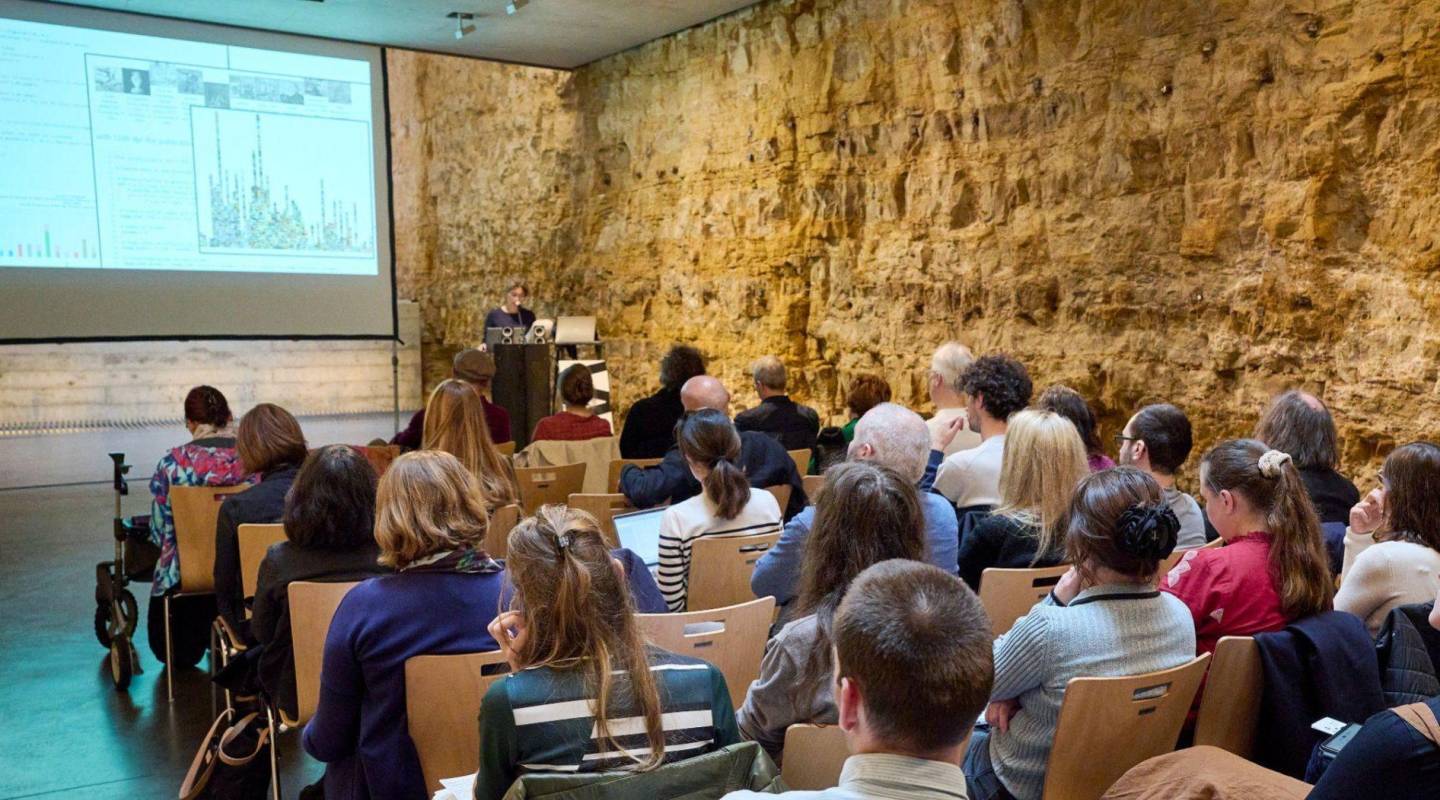
What does it truly mean to see a work of art? Museums often guide visitors through text panels, audio guides and talks. Now, the Augmented Artwork Analysis (AAA) app offers another way into art.
Presented by Roxanne Loos and Lisa Paillussière (Art History & Semiotics, Université catholique de Louvain-Saint-Louis / Fine Arts Museums of Belgium & Université Lyon 2) at last year’s Curating and Editing. Between Museums and Media. Gestures of Image Knowledge conference at the Nationalmusée um Fëschmaart, this digital tool invites us to embark on a visually driven journey of discovery.
AAA is a research-based platform designed to deepen observation through image-based knowledge. Instead of relying solely on words, AAA connects artworks to a constellation of related images – historical precedents, stylistic parallels and contemporary echoes – creating a rich visual dialogue. Visitors begin by viewing the artwork in the gallery. Then, using AAA, they navigate a network of digitised images on-screen, exploring connections that reveal hidden layers of meaning. This dual experience – physical and digital – turns a museum visit into an active process of comparison and interpretation.
This ambitious project is funded by the French National Research Agency (ANR) and the Luxembourg National Research Fund (FNR). It brings together over twenty researchers from art history, semiotics, digital design and computer science, led by the University of Luxembourg and the University of Lyon 2 / ENS. Key partners include the Musée National d’Archéologie, d’Histoire et d’Art (MNAHA), the Palais des Beaux-Arts de Lille and the Musée des Beaux-Arts de Lyon, alongside the Luxembourg Media & Digital Design Centre and CNRS.
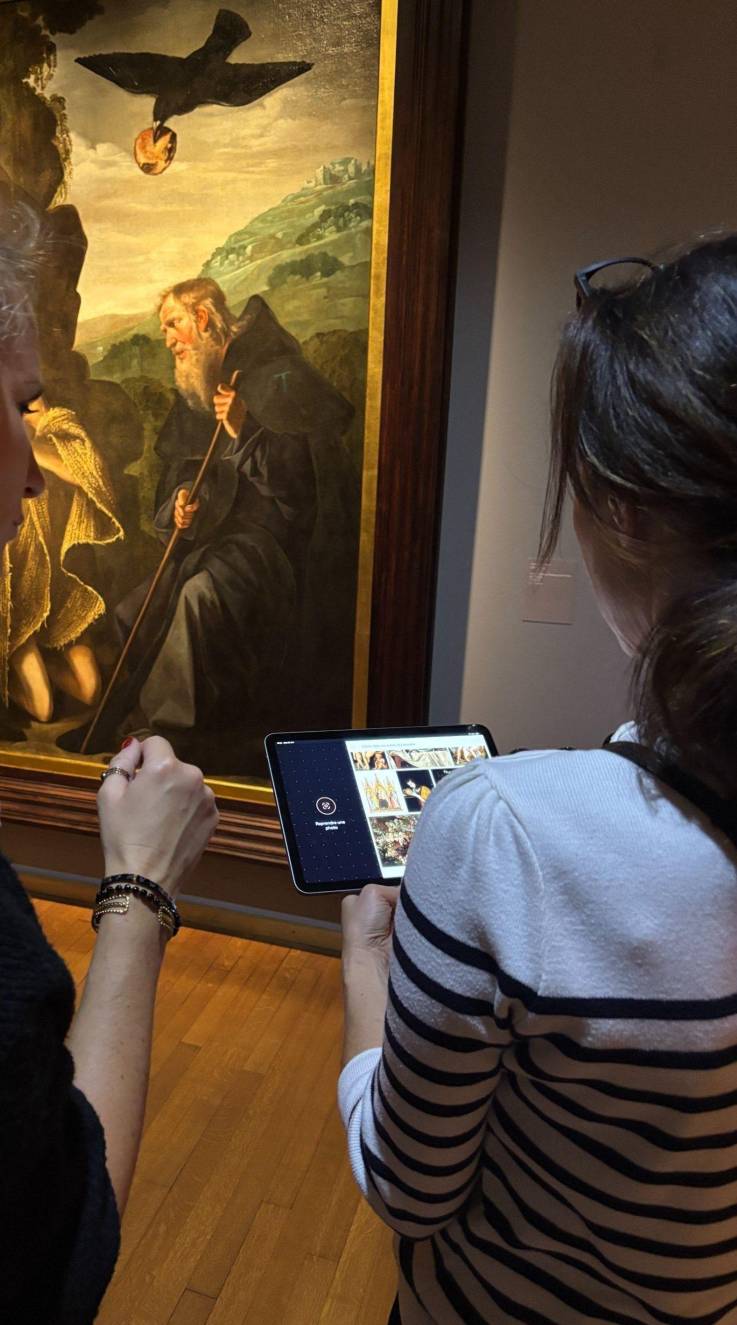
How it works
Behind the scenes, AAA organises its wealth of information through ontologies – structured maps that define concepts and their relationships. In Expert Mode, these maps cover four major domains: genesis, which includes style, school and artistic movement; iconography, which addresses themes, subjects and genres; formal analysis, which examines composition, colour and lighting; and patrimonialisation, which considers museum discourse and cultural values. This layered approach allows users to progress from basic visual elements to more complex interpretations.
In AI Mode, the process shifts dramatically. Here, the system identifies similarities, co-occurrences of objects and patterns across genres and movements. These algorithmic suggestions often surface surprising links, reopening the interpretative process and encouraging visitors to question what they see. The result is a dynamic dialogue between human and machine, where unexpected connections spark curiosity and deepen understanding.
One of AAA’s most intriguing features is its sensitivity to different cognitive styles. Some visitors prefer the encyclopaedic approach, seeking stabilised knowledge and structured pathways – what the team calls the “Diderot” profile. Others lean towards the exploratory, heuristic approach, enjoying the thrill of discovery and unexpected connections – the “Poirot” profile. AAA caters to both, offering a flexible experience that adapts to individual preferences and makes the museum visit a personalised journey.
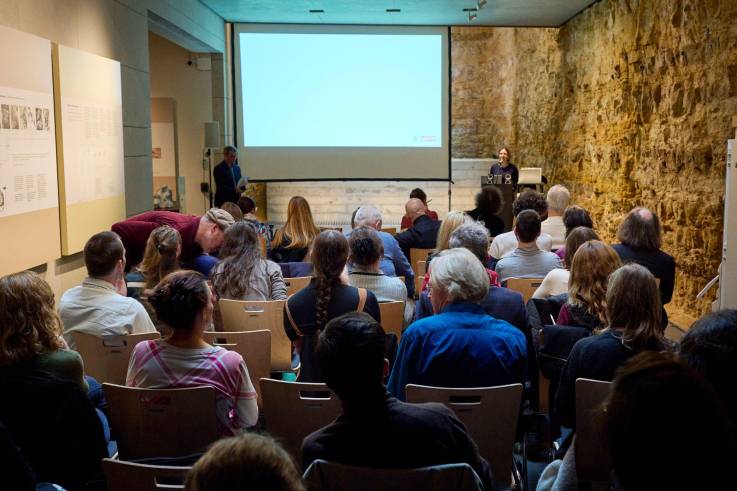
AAA in action
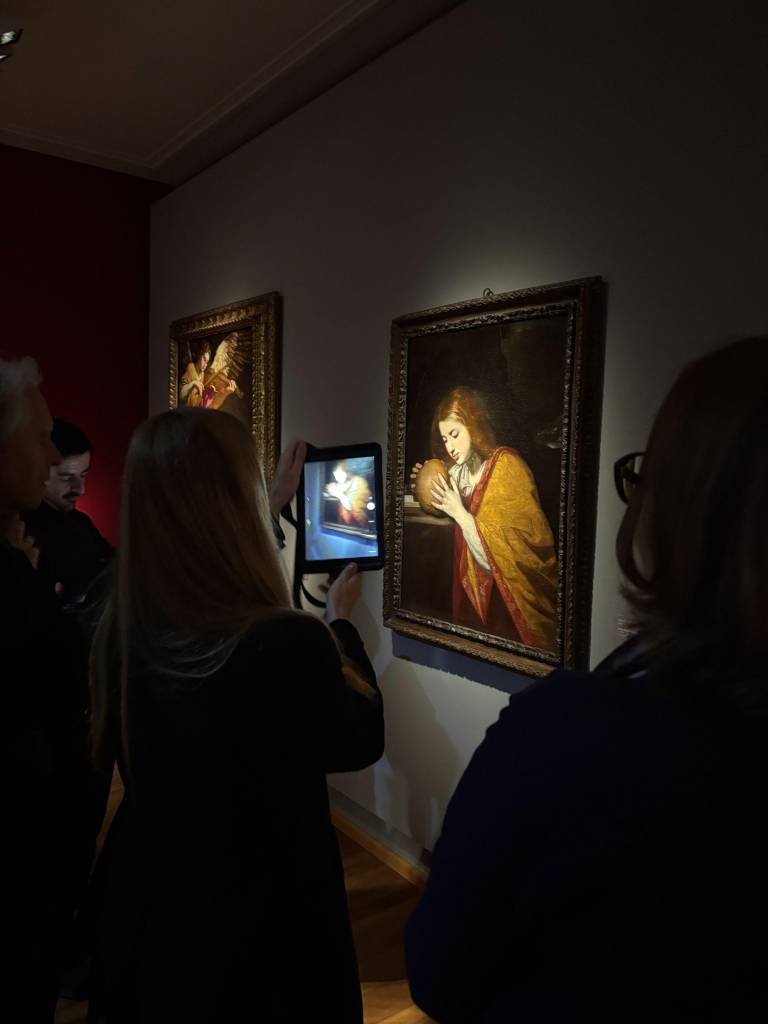
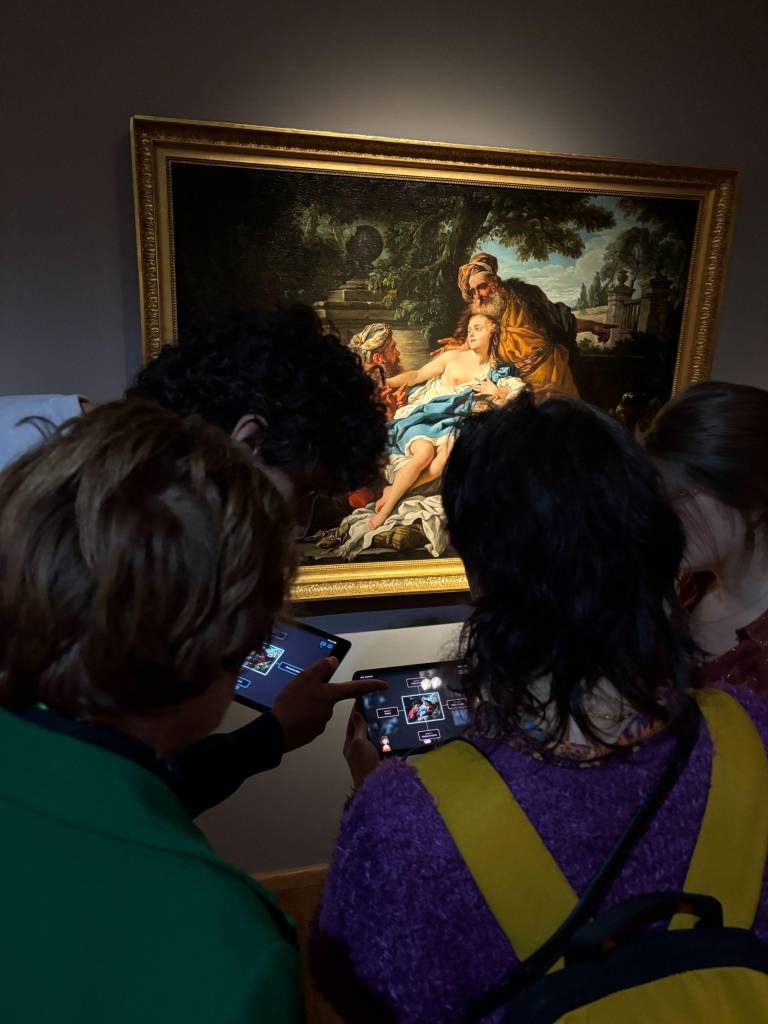
Following the project’s presentation at the conference, participants were invited to the museum’s Old Masters section to try the app in a real setting. Standing before paintings steeped in history, participants engaged with the app’s visual maps and AI-generated associations, experiencing firsthand how technology can reshape interpretation. The app encouraged them to look beyond the surface, revealing unexpected links and contextual layers that deepened their understanding of each work.
To capture their impressions, participants completed a feedback form, where they were asked to describe the experience in three words and reflect on what they appreciated most and least about the app. These insights are now being used to further refine the project, ensuring it continues to evolve in response to user experience.
By foregrounding visual relationships and integrating AI into the interpretative process, AAA empowers visitors to engage with art in a pluralistic, intuitive way. It is not about replacing traditional methods – it is about augmenting them, making art analysis richer, deeper and more interactive. As museums evolve, AAA points to a future where technology does not just inform – it enhances how we see.
Text: Katja Taylor (Presse et communication) - Photos: Katja Taylor, Tom Lucas (MNAHA)
Source: MuseoMag N° I - 2026
© Katja Taylor / MNAHA
© Katja Taylor / MNAHA