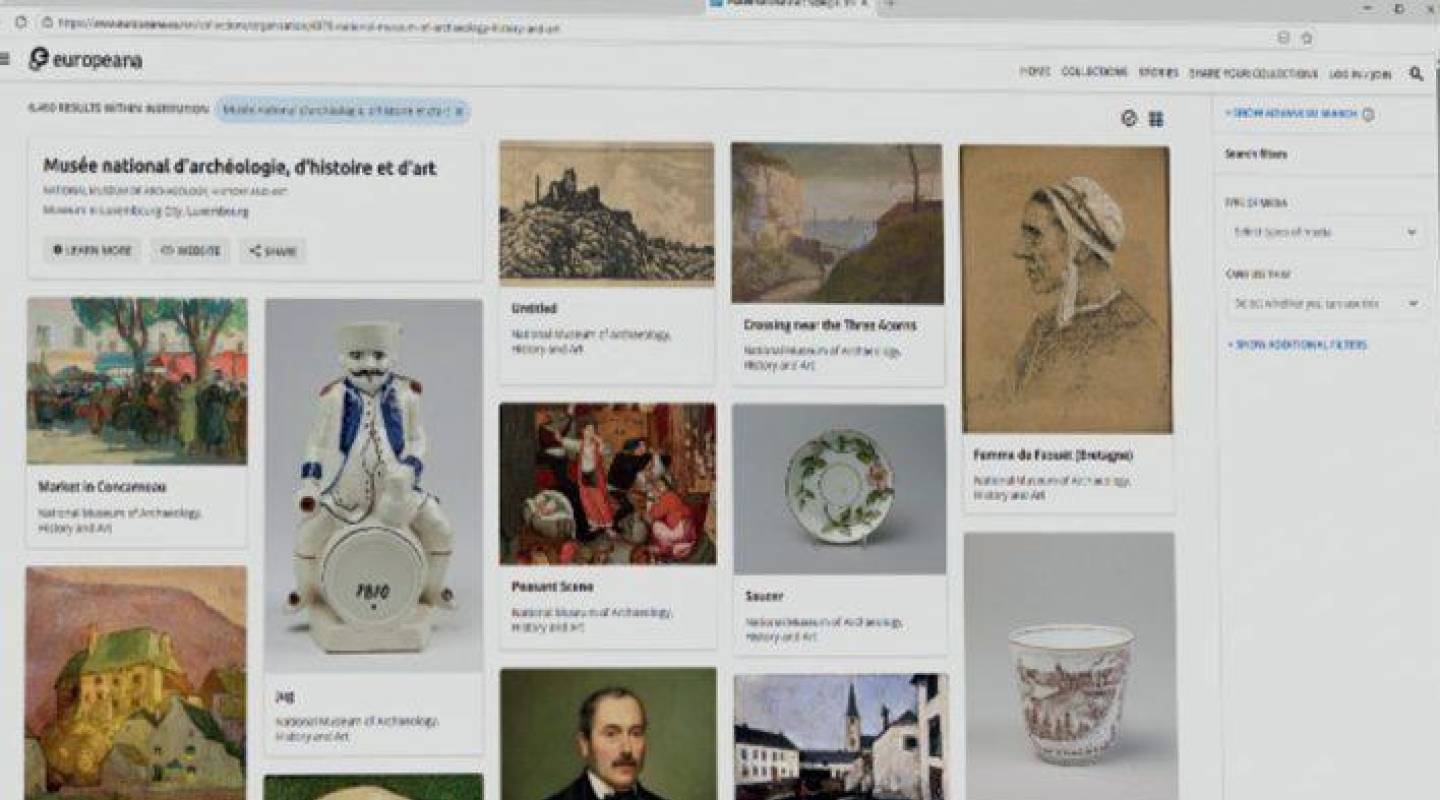
It is no secret that only a small fraction of the MNAHA’s collection can be exhibited at any given time. Luckily, the digital world gives us the opportunity to publish our collections online, which we have done since 2019.
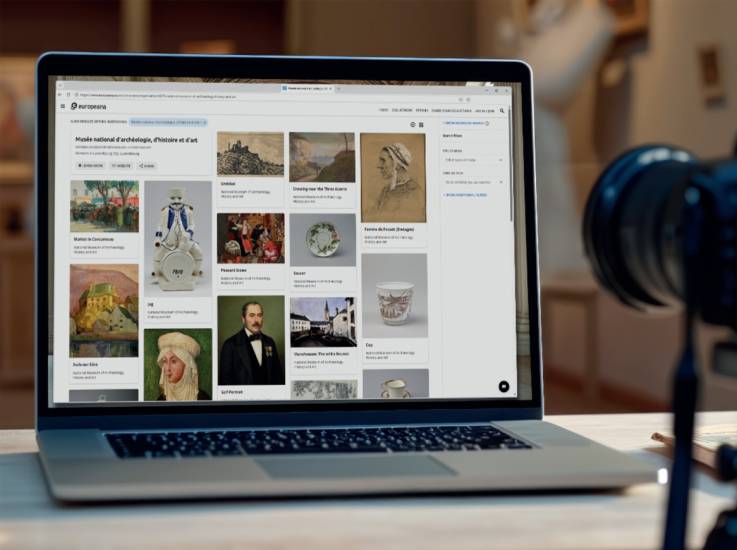
© MNAHA
We apply high standards when publishing objects; each one is professionally photographed, the metadata are checked and translated into 3 languages. And if the object or artwork is still in copyright, we seek permission to publish it. Even with these high standards, we have managed to publish around 1,500 new objects each year since 2019 and will continue to add more.
Once the platform was set up and we had a process in place to gradually publish our collections, it was time to think about the next steps. And that was a good moment to ask ourselves why we digitise and share our collections online in the first place. The answer to this question reflects the museum’s mission and values – we want to make our collections accessible, make them easy to find, invite the public to interact with them, share knowledge and help generate new knowledge.
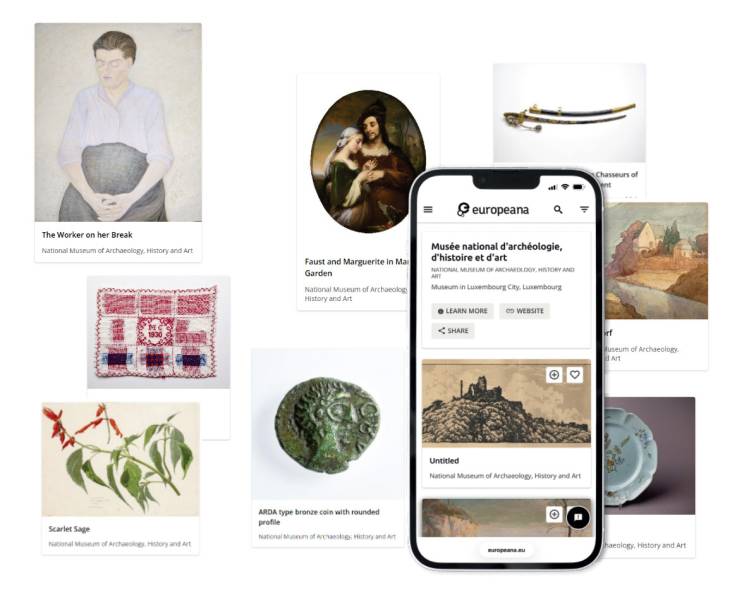
It made sense, therefore, to share the collection even more broadly by adding it to Europeana – a platform funded by the European Union where cultural heritage from institutions all over Europe is collected and shared. This means that, in addition to reaching more people, the collection now exists in a digital ecosystem containing objects from all over Europe, which will hopefully facilitate comparisons and allow new connections to be made. The MNAHA’s collection is the first collection of artworks and applied arts from Luxembourg to be added and represents an important addition of Luxembourgish culture to the platform.
The following example illustrates how objects from the MNAHA can now be perceived in a wider context through Europeana. A few years ago, a research project at the MNAHA led us to study the samplers in our collection. Samplers are embroidery projects that were stitched by young schoolchildren, usually girls to teach them needlework skills. The alphabets are especially easy to recognise. Isabelle Maas and I published the results of this research on our platform MNAHA Collections, where we documented how these samplers were made in Luxembourgish schools from the end of the 19th century until the 1960s. The samplers we studied are now published on Europeana as well, where, thanks to a curated gallery on this very type of object, they can be compared to samplers from all over Europe.
We invite you to explore the MNAHA’s objects, combine them with over 30 million other objects on the platform in a personal gallery and share it with us.
Note that we could only share objects to Europeana that are in the public domain and which, therefore, have no more copyright restrictions. You can still find objects in-copyright on MNAHA Collections.
Text: Edurne Kugeler (Section Numérisation, bibliothèque et archives) – Photos: MNAHA
Source: MuseoMag N° III – 2026
© MNAHA